
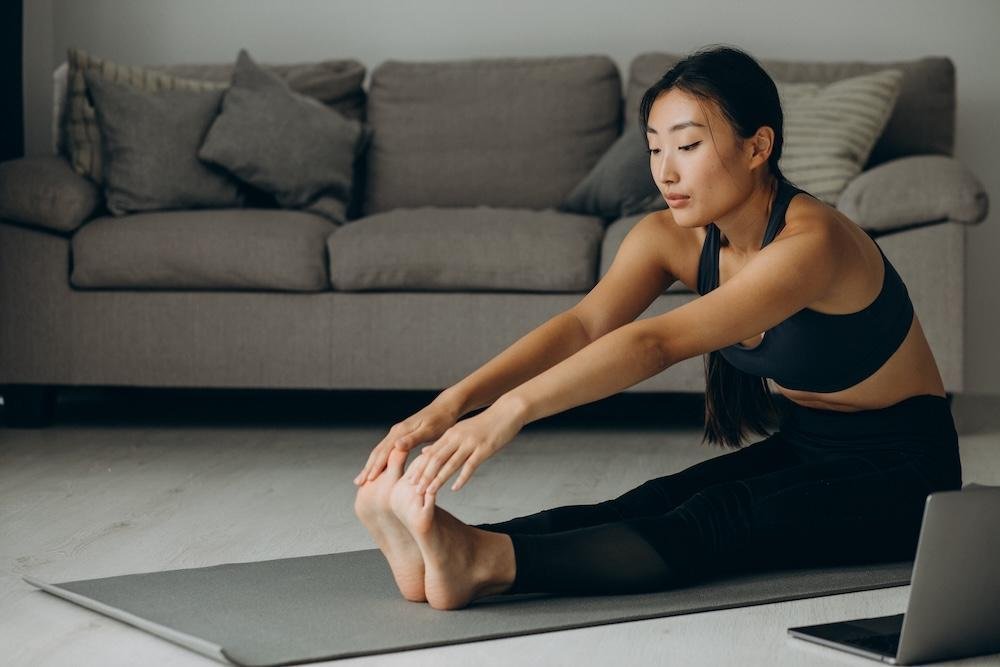
Plantar fasciitis exercises that stretch only the sole of your foot have limited effectiveness in settling heel pain. Discomfort usually stems from repeated strain on the plantar fascia, which is the band of tissue running from your calcaneus (heel bone) to your toes.
The plantar fascia supports your body weight and acts as an arch shock absorber. It tightens when calf muscles stiffen or arch muscles weaken. Prolonged standing on hard flooring, sudden increases in walking or running, and unsupportive footwear add to that strain, resulting in plantar fasciitis.
How Do Exercises Help Heel Pain Caused by Plantar Fasciitis?
Targeted exercises for heel pain reduce mechanical strain on the plantar fascia. Stretching lengthens tight tissues, while strengthening trains supporting muscles to share ground forces. A tight calf pulls upward on the heel bone, adding tension across the fascia with every step, while weak muscles force the tissue to absorb excess impact.
Effective plantar fasciitis exercises address four functional areas:
- Stretch the plantar fascia: Lengthens the band directly to minimise tension at the heel bone and ease sharp initial morning steps.
- Stretch the calf muscles: Loosens the gastrocnemius (larger upper calf muscle), soleus (deeper calf muscle), and Achilles tendon to eliminate upward pull on the heel.
- Strengthen the calf and arch muscles: Builds load capacity so muscles absorb body weight instead of the fascia.
- Roll the sole of the foot: Applies gentle localised pressure to ease arch tightness before full weight-bearing.
Daily stretching exercises for plantar fasciitis are essential because connective tissue adapts slowly. Heel pain typically settles over several weeks; skipping days allows tissues to tighten again.
When Should You Avoid Plantar Fasciitis Stretches?
Avoid plantar fasciitis stretches and arrange a podiatric assessment first if your heel pain comes with signs of a stress fracture, infection, or nerve irritation:
- Heel pain that began after a fall or direct impact
- Visible swelling, warmth, or redness around the heel
- Numbness, tingling, or burning in the heel or sole
- Constant resting or night pain that disturbs sleep
- Fever or feeling generally unwell alongside heel pain
- Open skin, wounds, or discharge on the foot
- Inability to bear weight through the heel
Take extra care if you have diabetes, neuropathy, or reduced circulation. A podiatrist should inspect your skin, sensation, and blood flow first, as injuries from overstretching or rolling can go unnoticed and heal slowly.
Mild stretch tension is acceptable, but sharp or stabbing sensations indicate excessive force, so reduce depth or stop immediately.
Which Stretching Exercises for Plantar Fasciitis Should You Do?
Three stretching exercises for plantar fasciitis target the plantar fascia, calf muscles, and Achilles tendon using only a wall and a towel. Perform non-weight-bearing stretches for plantar fasciitis in bed to prevent morning heel pain, followed by standing calf stretches once upright.
1. The Plantar Fascia Stretch Loosens the Tissue Under Your Arch
Overnight, your feet rest in a pointed position, allowing the fascia to contract. The first steps of the day stretch it abruptly, triggering sharp pain. Stretching before standing eases this sudden pull:
- Cross your leg: Sit on a chair or bed and rest the affected ankle over the opposite knee.
- Pull your toes back: Gently draw your toes toward your shin until you feel tension across the arch.
- Check the tension: Run your thumb along the arch to confirm the band feels firm and taut.
Hold the stretch for 10 seconds and repeat it 10 times. You can perform one set three times daily, especially before your first morning steps. Ease off if heel pain sharpens.
2. Calf Stretches Reduce the Pull on Your Heel Bone
A tight calf pulls the heel upward, escalating fascial tension. To loosen both calf muscles, vary your knee position: the upper gastrocnemius stretches with a straight knee, while the deeper soleus stretches with a bent knee.
Use a wall for support and perform both versions on each leg.
- Set your stance: Face a wall with hands supported. Place the affected leg behind you, toes forward and heel flat.
- Straight-knee stretch: Keep the back knee straight and lean forward to stretch the upper calf.
- Bent-knee stretch: Bend the back knee slightly while keeping the heel down to target the lower calf. Keep the rear heel flat on the floor throughout; lifting it negates the stretch.
Hold each position for 30 seconds; repeat three times per leg, twice daily in the morning and evening.
3. The Towel Stretch Loosens Your Plantar Fascia Before You Get Out of Bed
The towel stretch lengthens the arch and calf simultaneously while seated in bed, offering a gentle stretch on your plantar fascia before putting any weight on it.
- Loop towel: Sit upright with legs extended straight. Wrap a towel around the ball of your foot, holding an end in each hand.
- Straighten the knee: Keep the knee of that leg straight and rest the heel on the bed.
- Pull gently: Draw the ends toward you until you feel an even stretch along the arch and calf.
Hold for 30 seconds, three times per foot before leaving bed. Add an evening set if your heel still feels tight.
Which Plantar Fasciitis Exercises Build Foot Strength?
Strengthening exercises for plantar fasciitis build the muscular capacity required to share body weight with the fascia. Begin strengthening once acute stretching feels comfortable, starting with two sets and building to three as tissues adapt.
1. Heel Raises Strengthen the Calf and the Foot Arch
Heel raises strengthen calf and arch stabilisers, offloading tensile stress from the plantar fascia:
- Stand tall: Stand hip-width apart near a wall or rail for balance.
- Rise slowly: Lift both heels smoothly over two to three seconds onto the balls of your feet.
- Pause at the top: Hold the raised position for two seconds without rolling your ankles outward.
- Lower with control: Lower the heels slowly over three seconds to keep the calf muscles working.
Perform two sets of 10 repetitions, progressing to three sets (rest 60 seconds between sets). Practice daily, or every other day if your calves get sore the next morning. You can progress to single-leg raises or add a light backpack if the three sets are manageable.
2. Towel Curls Strengthen the Small Muscles Inside the Foot
Towel curls strengthen intrinsic foot muscles that support the arch and assist toe control:
- Anchor the heel: Sit with your foot flat on a towel over a smooth floor, heel planted firmly at the edge.
- Scrunch the towel: Curl your toes to pull the towel toward your heel without lifting the heel.
- Pause and release: Hold the curl for three seconds, then relax and flatten your toes.
- Reset and repeat: Slide the towel back out and curl again until the set is complete.
Complete two sets of 10 curls, building to three sets (rest 30 seconds between sets) daily. Add a light weight such as a small book on the far end of the towel for additional resistance once the curls feel easy, or pick up marbles with your toes.
Does Rolling Your Foot Help Plantar Fasciitis?
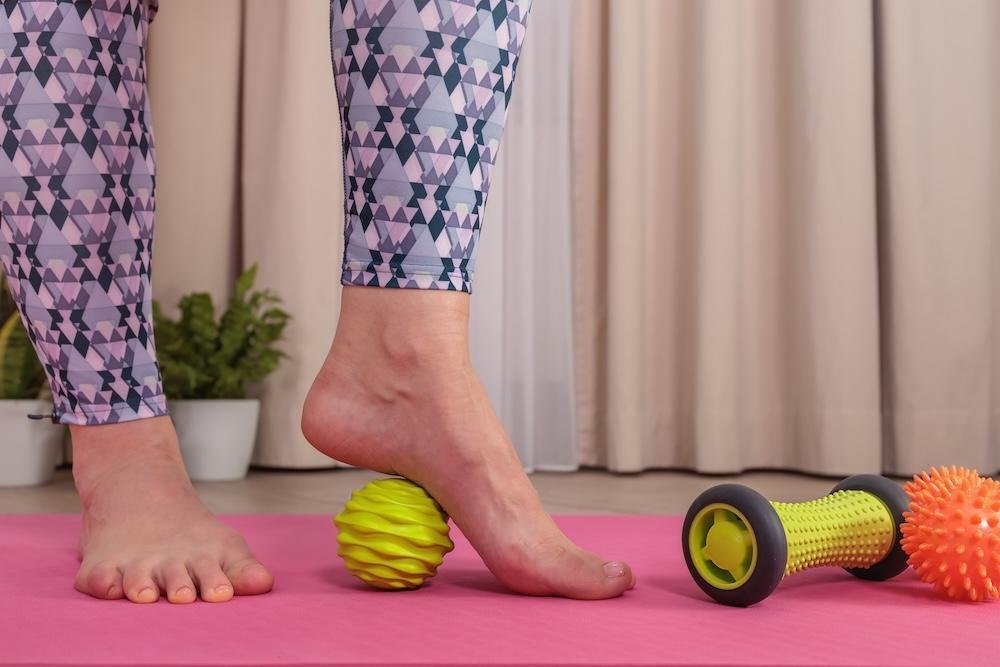
Rolling the sole provides short-term relief by easing arch stiffness, but works best alongside stretching and strengthening:
- Morning ball roll: Roll a tennis or massage ball along the arch for 2 minutes with firm, comfortable pressure before taking first steps.
- Post-activity cold roll: Roll a towel-wrapped frozen water bottle under the arch for 10 to 15 minutes after prolonged standing to soothe soreness.
Use the ball once a day, ideally before your first steps. Reserve the frozen bottle for up to two sessions a day after long spells on your feet.
Avoid rolling directly over the heel bone and skip cold rolling if you have diabetes or reduced sensation.
What Is a Simple Daily Routine for Plantar Fasciitis Exercises?
Spreading plantar fasciitis stretching exercises across five brief intervals maintains tissue mobility throughout the day:
- Before getting out of bed: Towel stretch, 1 set of plantar fascia stretches, and 2 minutes of ball rolling.
- Before leaving home: Standing straight-knee and bent-knee calf stretches (3 x 30 seconds per leg).
- During the workday: One set of seated plantar fascia stretches after long periods of sitting or standing on the MRT.
- In the evening: Three sets of heel raises and towel curls, followed by calf and arch stretches.
- After a long day on your feet: Roll a towel-wrapped frozen bottle for 10 to 15 minutes if soreness flares.
People who stand a lot for work, such as teachers, nurses and retail staff, can add a calf stretch at lunchtime.
How Long Do Plantar Fasciitis Exercises Take to Work?
Targeted exercises for plantar fasciitis typically reduce morning stiffness within 2 to 4 weeks, though full recovery takes several weeks to a few months. Healing speed depends on:
- Symptom duration: Long-standing pain takes longer to resolve than recent episodes.
- Time on your feet: Long hours on hard flooring continually add strain.
- Footwear: Cushioned shoes with arch support speed recovery, while flat or worn shoes delay it.
- Foot shape: Flat feet or high arches alter weight distribution.
- Consistency: Daily practice produces steadier progress than sporadic sessions.
How Can You Manage Plantar Fasciitis in One Week?
While many look for how to cure plantar fasciitis in one week, full tissue healing requires more time. However, one week of dedicated care can noticeably ease first-step pain:
- Stretch daily: Complete plantar fasciitis stretching exercises daily, adding heel raises and towel curls after a few days.
- Wear supportive shoes indoors: Avoid walking barefoot on hard floors; wear cushioned, supportive footwear.
- Pause high-impact activity: Rest from running, jumping, and sports for at least a week to reduce tissue strain.
- Increase activity gradually: Resume walking in short intervals, lengthening them as pain settles.
If heel pain doesn’t improve after a week of consistent home care, schedule a podiatric assessment to evaluate your walking pattern, foot shape, and footwear.
When Are Exercises Not Enough for Plantar Fasciitis?
Exercises alone may not suffice if heel pain persists beyond two weeks of consistent practice. Persistent strain often stems from biomechanical factors like flat feet, high arches, or worn footwear. Podiatric options include:
- Arch support: A custom made foot insole redistributes pressure and supports your arch to suit your specific foot shape, providing support that off-the-shelf devices may not match.
- Tissue stimulation: Non-invasive shockwave treatment uses acoustic waves to boost local blood flow to the plantar fascia.
- Advanced modalities: Extracorporeal shockwave therapy (EWST) works within a broader clinical plan alongside exercises and footwear modifications to stimulate tissue repair.
- Footwear and gait reviews: A podiatrist assesses shoe support and walking mechanics to identify extra sources of strain.
Schedule an Assessment If Plantar Fasciitis Does Not Settle
Plantar fasciitis exercises address the calf and arch muscles that influence strain on the plantar fascia. Consistent daily practice gives those muscles time to adapt.
If your heel pain has not shifted after a few weeks, the cause is usually mechanical and worth having assessed. Book an appointment with us at Dr Foot Podiatry to get started.
Plantar Fasciitis Exercises FAQs
How often should you do plantar fasciitis stretches?
Do the plantar fascia stretch three times a day and the calf stretches twice a day. The towel stretch suits once or twice a day. Strengthening exercises suit once a day, or every other day if the muscles feel sore.
When should you do plantar fasciitis stretches?
Do the first set before your first steps in the morning, because the fascia tightens overnight. Repeat after long periods of sitting or standing, and before and after exercise.
Should you stretch through heel pain?
Mild tension in the arch or calf is usually acceptable, but sharp or stabbing pain signals that the stretch is too intense. Reduce the depth or stop, and seek an assessment if pain stays sharp across several days.
Is walking good for plantar fasciitis?
Short walks in supportive shoes are usually tolerated and keep the foot moving. Long walks on hard flooring may increase strain, so lengthen walks gradually as pain settles. Pain that rises above mild discomfort during a walk suggests the distance is too long.
Can you do plantar fasciitis exercises barefoot?
Stretches for plantar fasciitis can be done barefoot while seated or lying down. Heel raises and towel curls suit bare feet on a mat, while supportive shoes are the better choice for walking on hard flooring.
Schedule an Assessment If Plantar Fasciitis Does Not Settle
Dr Foot’s podiatrists can identify the cause and get you the right treatment.