
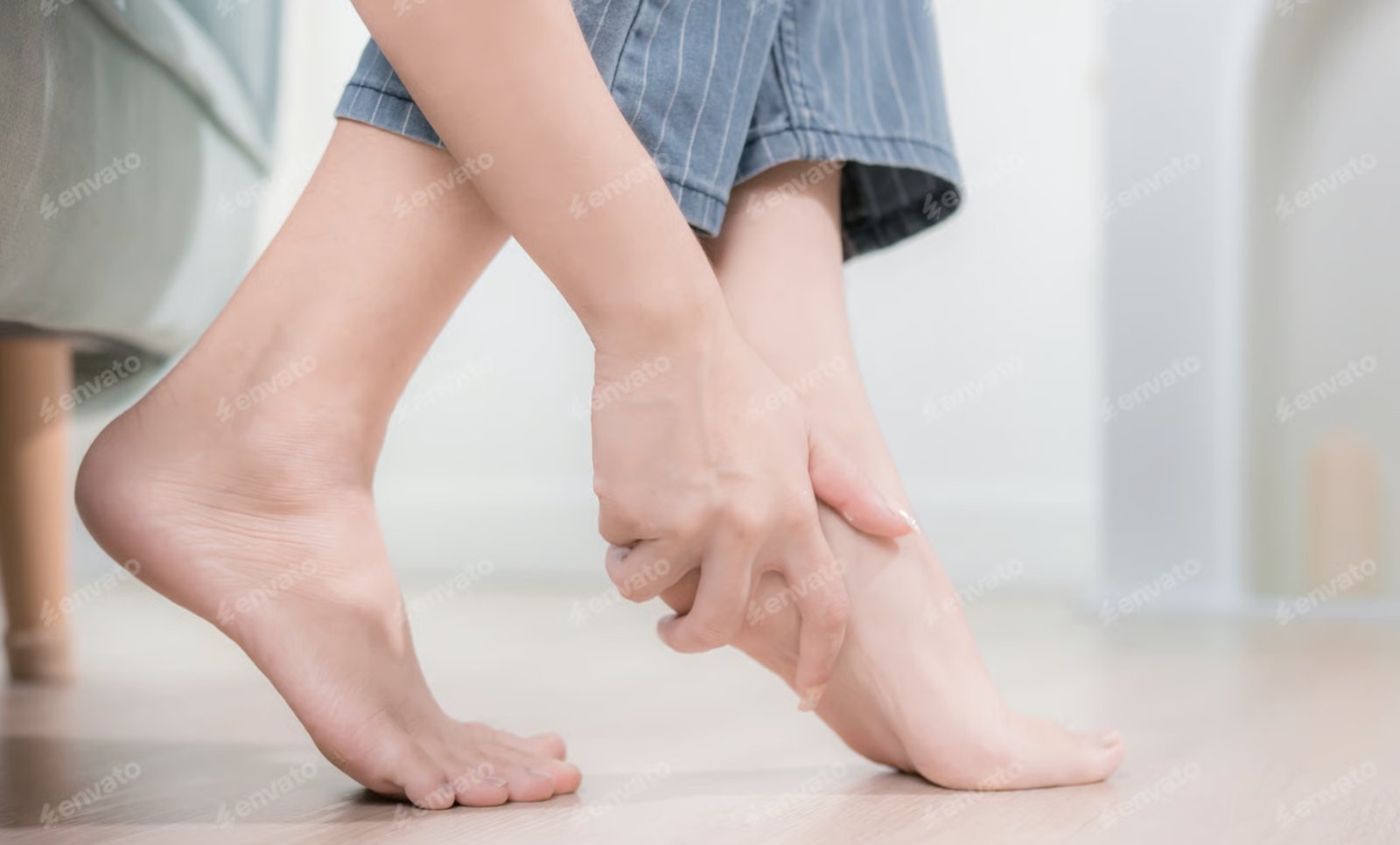
Foot arch pain rarely means the arch itself has failed. More often, a tendon, a joint, or the band of tissue along your sole is carrying more load than it can manage.
Identifying the strained structure shows you what to change first, as well as whether it needs professional attention.
What the Arch Does
The arch works as a spring and a shock absorber. Several structures share the load each time your foot lands, and arch pain usually develops where one of them carries more than its share.
Four structures hold the arch up and spread force across your foot with every step.
- Bones: Wedge-shaped foot bones form a curved frame that spreads body weight.
- Ligaments: Strong bands link the bones together and limit how far the arch flattens.
- Tendons: The posterior tibial tendon lifts and steadies the arch while you walk.
- Plantar fascia: A thick band along the sole tightens like a cable to support the arch.
Arch of foot pain feels different depending on the structure involved, from a burning sole to an aching inner border.
Cause 1: Plantar Fasciitis
Plantar fasciitis (irritation of the plantar fascia, the thick band that runs from your heel to your toes) ranks among the most frequent causes of foot pain in the arch.
Pain typically peaks with the first steps after rest, then eases as the tissue warms up. However, long hours standing on hard flooring or walking often bring the ache back by evening.
A podiatrist can assess how the fascia is loaded and provide plantar fasciitis treatment in Singapore that fits your daily routine.
Cause 2: Flat Feet (Overpronation)
A flat foot has a lower arch, so the ankle often rolls inward during walking. The inward roll, called overpronation, stretches the plantar fascia and the inner tendons, which can produce inner arch foot pain after long walks.
Cause 3: Posterior Tibial Tendon Dysfunction
The posterior tibial tendon runs behind the inner ankle bone and holds up the arch. Posterior tibial tendon dysfunction (PTTD) develops when the tendon becomes inflamed or weakened. Early signs resemble a sprain, so the problem often goes unnoticed while the arch gradually loses its support.
Early signs often include the following changes along the inner foot and ankle.
- Inner ankle pain: Aching or swelling develops behind the inner ankle bone, particularly after walking.
- Weak push-off: Rising onto the toes of one foot becomes difficult.
- Flattening arch: The arch sinks gradually, and the heel may tilt outward.
Cause 4: High Arches
A foot with high arches (pes cavus, an arch that stays raised under body weight) is rigid and absorbs shock poorly. High arch feet concentrate load on the heel and the ball of the foot instead of spreading it across the sole.
The result is often high arch foot pain along the outer edge, together with pain in the foot arch itself where the plantar fascia tightens.
Cause 5: Overuse and Unsupportive Footwear
A sudden rise in walking or running volume can overload a healthy foot arch. Additionally, flat sandals, worn trainers, and thin soles fail to provide the support the arch relies on.
Over time, the accumulated strain can progress to pain in the feet while walking that settles only when you sit down and rest.
Inner Arch vs Outer Arch Pain
Inner foot arch pain usually involves the plantar fascia, the posterior tibial tendon, or flat feet.
Meanwhile, outer arch pain more often reflects high arches, a stiff midfoot, or overworked tendons along the outer ankle.
Self-Test: Which Pain Are You Experiencing?
A short check at home can show which pattern fits you best. Sit with your foot resting across the opposite knee, then press gently along the arch from heel to ball.
Compare what you feel with the three checks below to see which result matches your symptoms.
- Press along the inner arch: Tenderness near the heel or midfoot often points to the plantar fascia or posterior tibial tendon.
- Check the outer edge: Soreness along the outside of the foot often fits high arches or tendon overuse.
- Rise onto your toes: Difficulty lifting the heel on one foot may suggest posterior tibial tendon weakness.
How to Relieve Foot Arch Pain at Home
Mild arch pain often settles with a few weeks of consistent home care. The routines below target the sole, calf, and arch muscles.
Stretches and Strengthening
Gentle stretching releases tension through the sole and calf. Perform each movement twice daily for two to three weeks.
- Pull the toes back: Sit with the ankle across the opposite knee, then hold for 10 seconds. Repeat 10 times.
- Stretch the calf: Step one foot back against a wall and hold for 30 seconds. Repeat three times.
- Lift the arch: Draw the ball of the foot toward the heel without curling the toes. Hold for five seconds and repeat 10 times.
Rolling
Rolling a frozen water bottle under the arch loosens tight tissue. Roll for two minutes, once before your first steps of the day and once after work.
Choosing Supportive Footwear
Supportive footwear lowers strain on the arch during long days on hard flooring.
- Opt for a firm heel cup: A firm cup steadies the rear foot and limits inward rolling.
- Replace worn trainers: Flattened midsoles lose support and add strain to the arch.
Conservative Treatment Options for Arch Pain
When home care leaves symptoms unchanged after a few weeks, a podiatrist can address the mechanical cause. Dr Foot Podiatry offers conservative options matched to the structure involved.
Pharmacy arch supports often suffice for mild, short-term discomfort. However, custom foot insoles are moulded to your foot and redistribute pressure across the arch, which suits persistent flat feet and tendon strain.
For raised arches, high arch feet treatment typically combines cushioned insoles with calf and foot mobility work, which spreads load away from the heel and forefoot.
Two in-clinic therapies can support recovery alongside insoles and exercise, depending on the tissue involved.
- Radial shockwave therapy: Delivers pressure waves to irritated tissue, which may stimulate blood flow and recovery.
- Low-level laser therapy: Applies low-power light to irritated tissue (a process called photobiomodulation), which may reduce inflammation and ease pain.
Both therapies are typically part of a wider management plan that includes insoles and prescribed exercise, so the load behind the pain is addressed too.
Frequently Asked Questions About Foot Arch Pain
Why does the arch of my foot hurt when I walk?
Walking pain usually reflects overload of the plantar fascia, the posterior tibial tendon, or the midfoot joints. Each step loads these structures, so pain in the foot arch often builds over longer walks.
Can unsupportive shoes cause arch pain?
Yes. Flat sandals and worn shoes provide little support, so the plantar fascia and tendons absorb more force.
Will arch pain go away on its own?
Mild strain from a sudden increase in activity often settles within a few weeks of home care. However, pain from flat feet, high arches, or tendon dysfunction typically returns until the underlying load is addressed.
When Arch Pain Calls for Professional Assessment
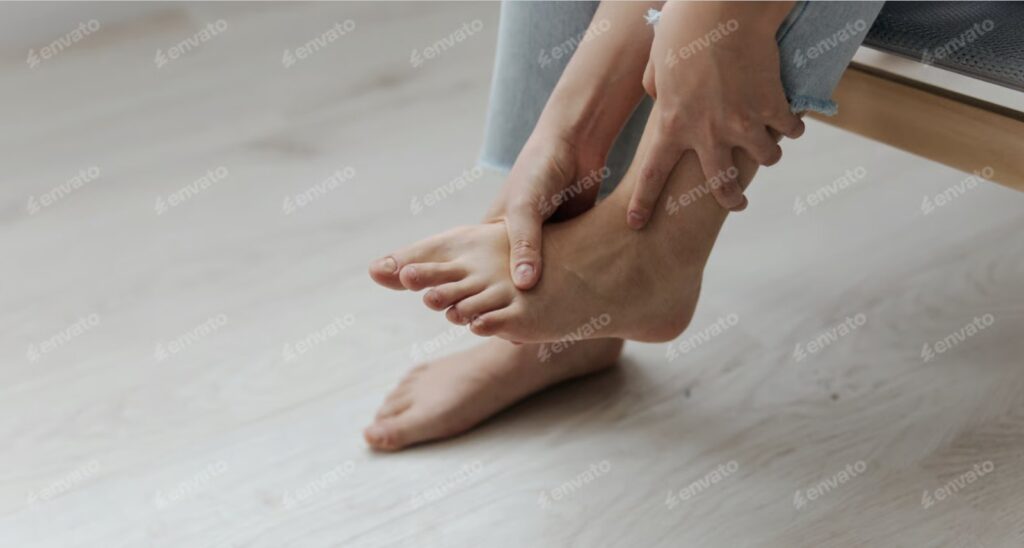
Arch pain in one foot that persists beyond two to three weeks of home care warrants a professional assessment. Swelling along the inner ankle, a flattening arch, night pain, or numbness and tingling in the sole also call for earlier evaluation.
Anyone with diabetes or reduced circulation should have new arch pain assessed promptly. A podiatrist will evaluate your gait, arch shape, and tendon strength, then outline a management plan that addresses the structure behind the pain.
Schedule an assessment with Dr Foot to have your arch pain evaluated and a management plan put in place.
When Arch Pain Calls for Professional Assessment
Dr Foot’s podiatrists can identify the cause and get you the right treatment.