
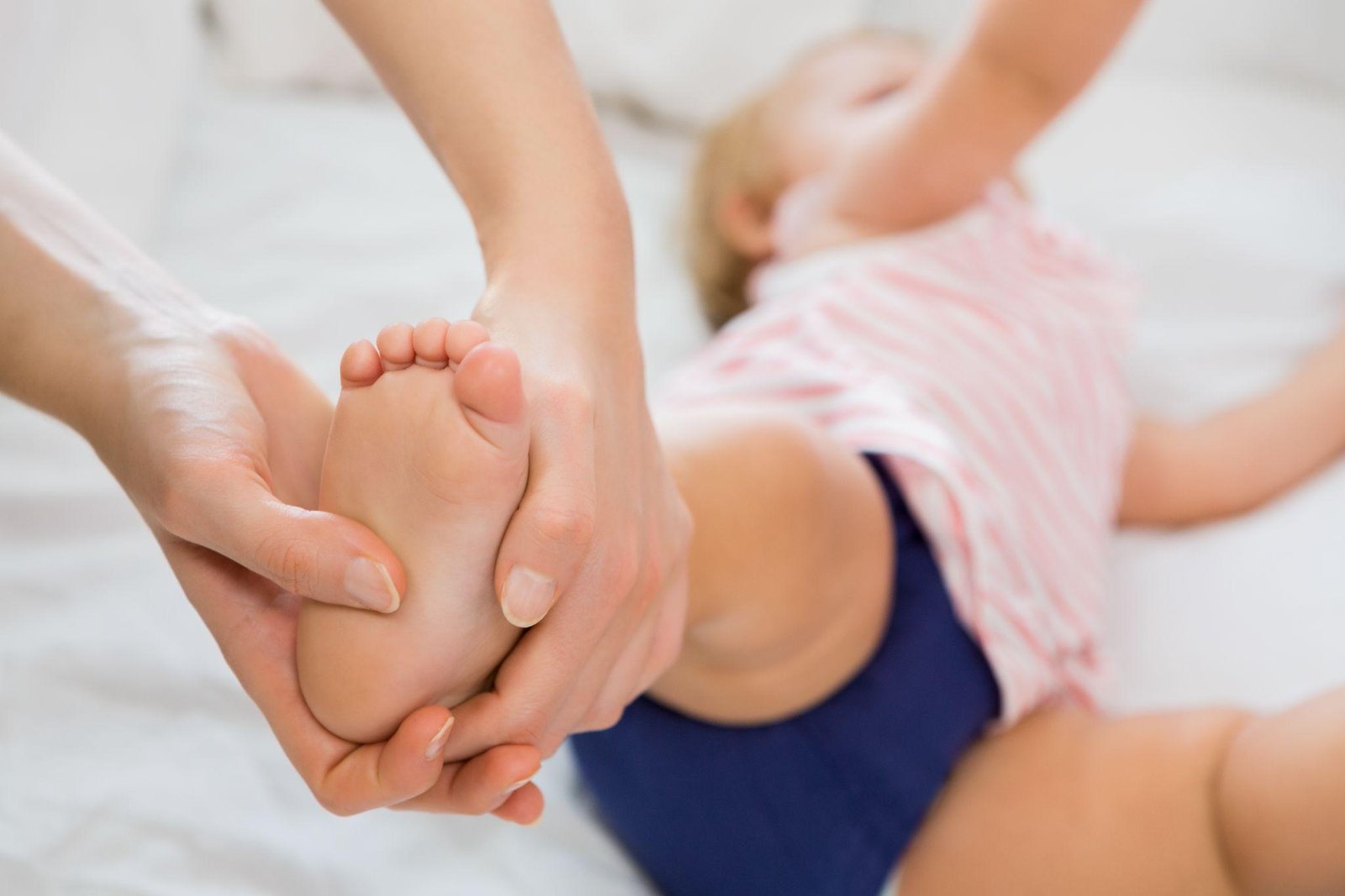
Most foot problems in children are part of normal development. The five most common paediatric foot conditions are flat feet, in-toeing, toe walking, heel pain, and nail or skin problems. What separates them from normal growth is pain, or a pattern that lasts past the age it usually resolves.
How Children’s Feet Develop and What Is Normal at Each Age
Your child’s feet are made largely of cartilage (soft, flexible tissue) that hardens into bone through childhood, which is why foot shape and walking patterns change so much in the early years.
- Birth to Age Two: A fat pad beneath the arch makes the foot look flat, and a wide, unsteady gait with occasional tiptoeing is expected as balance develops.
- Ages Two to Six: The arch typically forms gradually during these years, and in-toeing often eases as the shin and thigh bones rotate outward with growth.
- Ages Six to Ten: Walking patterns and leg alignment usually settle into an adult-like shape, so if it hasn’t changed by now, it’s worth noting.
- Ages Eight to Fourteen: Growth spurts place the still-growing area at the back of the heel bone under repeated strain, particularly in children who play running or jumping sports.
1. Flat Feet
Most flat feet in children are flexible, meaning the arch reappears when your child stands on tiptoe or sits. With rigid flat feet, which are less common, the arch stays absent in every position.
A child with flat feet and no pain typically needs monitoring rather than intervention. However, arch or leg pain, early fatigue on walks, or avoiding sport suggests the foot isn’t coping with the load, and flat feet in that situation are worth assessing.
2. In-Toeing
In-toeing, often called pigeon toe, is when your child’s feet point inward as they walk. The turn usually comes from a twist in the shin bone (tibial torsion) or the thigh bone (femoral anteversion), not the foot itself.
Most in-toeing resolves as the leg bones rotate outward as the child grows. Where foot posture adds to the inward turn, a podiatrist may recommend a supramalleolar orthosis, a short brace that sits just above the ankle bones, to steady the heel while walking.
3. Toe Walking
Toe walking is common as toddlers learn to balance, and most children outgrow it by around age three. Some keep walking on their toes out of habit, while for others the cause is physical and worth having assessed.
A child walking on their toes out of habit can stand flat, both heels down, when asked. When a tight calf or Achilles tendon (the cord joining the calf to the heel) is the cause, the heel cannot comfortably reach the floor. One-sided toe walking warrants an assessment.
4. Sever’s Disease
Sever’s disease is irritation of the growth plate (the zone of cartilage where bone lengthens) at the back of the heel bone, known clinically as calcaneal apophysitis. It is the most common cause of heel pain in active children ages 8 to 14.
During a growth spurt, the heel bone often grows faster than the calf muscles lengthen. The Achilles tendon then pulls harder on the growth plate with every jump, sprint, or change of direction, and the repeated tension produces pain.
Heel pain in a child is often dismissed as growing pains that will pass. Limping after sport, or pain when the back of the heel is squeezed, points to Sever’s disease instead.
5. Ingrown Toenails and Plantar Warts
An ingrown toenail develops when the edge of the nail grows into the skin beside it, causing redness, swelling, and tenderness. Cutting nails too short, rounding the corners, and tight school shoes are the usual contributing factors in children.
A plantar wart is a skin growth on the sole caused by the human papillomavirus (HPV), often picked up barefoot at swimming pools and shared changing rooms. It can resemble a callus, but tiny dark dots inside it usually set it apart.
Repeated cutting at home often drives an ingrown edge deeper into the skin. If a wart spreads or hurts when your child walks, it’s better to have it assessed than treated with pharmacy products.
Signs Your Child’s Feet Need an Assessment
Children rarely describe foot discomfort clearly, so changes in how they move or play are often the first sign of foot problems.
- Ongoing Pain: Foot, heel, or leg pain that returns after activity, lingers into the next day, or wakes your child at night points to more than normal tiredness.
- Reduced Activity or Frequent Tripping: Tiring quickly, avoiding sport, or falling more often than peers past the toddler years can indicate a foot that is struggling with load.
- One-Sided Differences: One foot, leg, or walking pattern that looks noticeably different from the other is less likely to be part of normal development.
- Uneven Shoe Wear: Soles that wear down quickly on the inside or outside edge often reflect how the foot rolls during walking, even before your child mentions discomfort.
- Skin or Nail Changes: Redness, swelling, or discharge around a nail, or a growth on the sole that doesn’t settle within a few weeks, needs assessment.
How to Choose Shoes for Your Child’s Feet
Footwear cannot build an arch, but the right shoe reduces strain on a developing foot. Look for these features when buying school or sports shoes.
- Room to Grow: Leave about a thumb’s width between the longest toe and the tip of the shoe, and recheck the fit every few months as the foot grows.
- Firm Heel Counter: A heel cup that resists squeezing holds the heel steady, which limits the inward rolling that makes flexible flat feet tire sooner.
- Flexible Forefoot: The sole should bend at the ball of the foot where the toes push off, and stay firm through the middle rather than folding in half.
- Secure Fastening: Laces, buckles, or hook-and-loop straps prevent the foot from sliding forward, protecting the toes and reducing pressure on the nail edges.
Footwear, Insoles, and SMOs: Conservative Management for Children
Most paediatric foot conditions are managed without surgery, starting with footwear changes, calf stretches, and adjustments to training load before any device is introduced.
Custom Insoles
Custom insoles are moulded to your child’s foot and redistribute pressure away from overloaded areas. For a child with flat feet that tire easily, or heel pain from Sever’s disease, they can reduce strain on the arch and growth plate during daily activity.
Supramalleolar Orthoses (SMOs)
A supramalleolar orthosis (SMO) controls inward roll of the heel and ankle and is often used when an insole alone doesn’t provide enough stability.
Where more control is needed, a podiatrist may recommend a longer foot support brace that extends up the calf. Because children’s feet keep changing, any device is reviewed regularly so the fit and level of support match their current growth stage.
What a Paediatric Foot Assessment at Dr Foot Involves
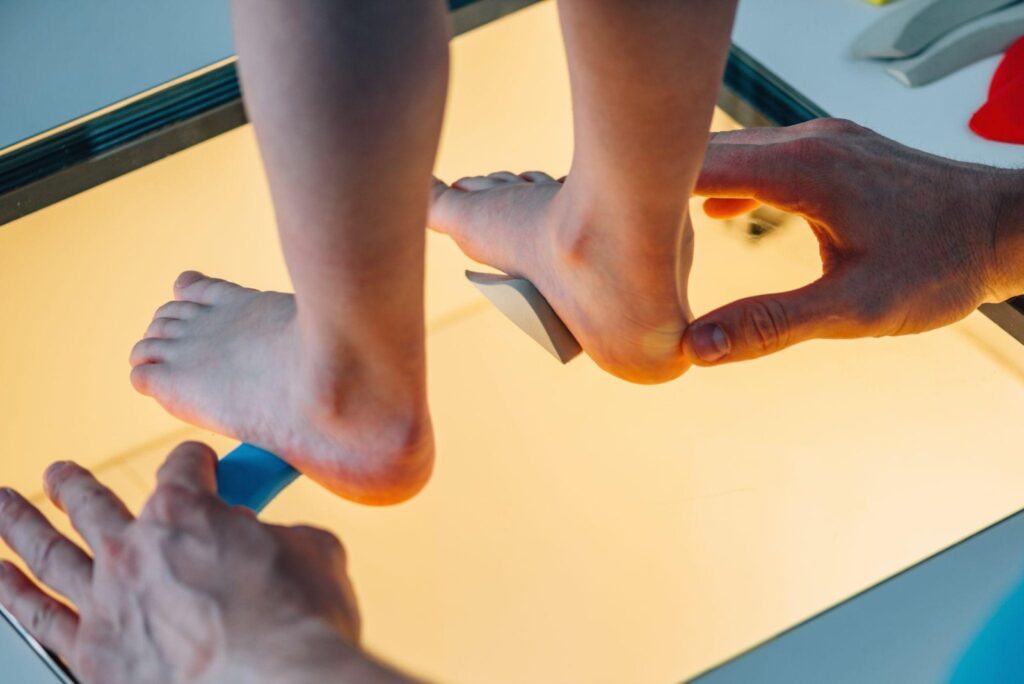
At Dr Foot Podiatry, we start by reviewing your child’s history, developmental milestones, and activity level. We then watch them stand and walk, and check joint range and muscle flexibility in the feet, ankles, and calves.
We look for patterns that fit your child’s age or suggest a mechanical cause. Where management is needed, we match the plan to their growth stage and review it as the foot develops, rather than applying a standard device.
Frequently Asked Questions About Foot Problems in Children
What Are Some Common Foot Injuries in Children?
Ankle sprains, heel growth-plate irritation from sport, and stubbed or bruised toes are among the most common foot injuries in children. Pain lasting more than a few days, or difficulty bearing weight, warrants an assessment.
What Are the Most Common Orthopaedic Conditions in Children?
The most common paediatric foot conditions are flat feet, in-toeing, toe walking, and Sever’s disease. Most relate to growth rather than injury, so your child’s age shapes how each one is managed.
What Causes Growing Pains in Children’s Feet?
Growing pains usually appear as a dull ache in both legs in the evening after an active day. Flat feet can add to that tiredness, because the leg muscles work harder to stabilise a foot with a lower arch.
Pain fixed in one spot, such as the heel, or pain that causes limping, is more likely a specific condition worth having assessed.
Supporting Your Child’s Feet Through Each Stage of Growth
Most foot problems in children follow a normal developmental timeline and settle with growth. Pain, a pattern that persists past its expected age, or a difference between one side and the other are what point to a mechanical cause instead.
Schedule a paediatric foot assessment with Dr Foot to have your child’s walking pattern and foot development evaluated.
Supporting Your Child’s Feet Through Each Stage of Growth
Dr Foot’s podiatrists can identify the cause and get you the right treatment.