

Effective diabetic foot care begins well before a wound appears. Over time, elevated blood sugar damages nerves and reduces blood flow, so an early sign of diabetes in feet, such as a blister or small cut, can easily go unnoticed. If left untreated, these injuries can rapidly become a chronic diabetic foot ulcer. Practising daily checks alongside routine diabetic foot screening helps prevent severe diabetic foot complications.
What Is Diabetic Foot?
Diabetic foot refers to foot problems that develop when diabetes damages the nerves and blood vessels in your legs and feet. Common diabetic foot complications include ulcers, infections and changes in foot shape.
Why Does Diabetes Affect Your Feet?
High blood sugar affects your feet in two main ways. First, it can cause peripheral neuropathy (nerve damage), which dulls your ability to feel pain, heat or pressure.
Second, it can lead to peripheral arterial disease (narrowed arteries in the legs), which reduces blood flow to your feet. With less blood flow, wounds receive less oxygen and often heal slowly.
What Are the Signs and Symptoms of Diabetic Foot?
Diabetic foot signs and symptoms usually develop gradually, so checking your feet regularly helps you spot the five changes below early.
1. Numbness, Tingling or Burning in Your Feet
Numbness, tingling or a burning feeling often appears before any visible change to your skin. As sensation fades, you may stop noticing a stone in your shoe or a blister forming.
2. Dry, Cracked Skin and Hard Calluses
Nerve damage can reduce sweating, leaving your heels and soles dry and prone to cracking. At the same time, pressure from walking builds thick calluses over bony areas.
Calluses can hide bleeding or skin breakdown underneath, which is why corns and calluses on feet need closer attention when you have diabetes.
3. Thick or Fungal Toenails
Reduced circulation can make toenails more prone to fungal infection, leaving them thick, yellow and brittle. Creams struggle to reach fungus under a thick nail. For this reason, fungal nail treatment in Singapore typically starts with nail debridement (thinning the nail plate).
4. Cuts, Blisters or Sores That Heal Slowly
A cut or blister that stays open for more than a few days may signal a diabetic foot ulcer (an open skin wound). Ulcers commonly form under the ball of the foot, on the toes or at the heel, where pressure is highest.
5. Changes in Colour, Temperature or Swelling
Pale, bluish or cold skin can point to reduced blood flow. In contrast, a red, warm or swollen foot may indicate infection or Charcot foot (weakened foot bones that gradually change shape).
Who Is Most at Risk of Diabetic Foot Complications?
Anyone with diabetes can develop foot problems. However, the following factors raise the likelihood of diabetic foot complications.
- Diabetes managed over many years
- Persistently high blood sugar levels
- Smoking, which narrows blood vessels further
- A previous foot ulcer or amputation
- Kidney disease or reduced eyesight
- Foot deformities that create pressure points
What Does a Daily Diabetic Foot Care Routine Involve?
A few minutes of daily care helps you spot changes early and keeps your skin intact.
- Check your feet every day: Look at your soles, heels and toe gaps, using a mirror if bending is difficult.
- Wash in lukewarm water: Test the water with your elbow first, as your feet may misjudge heat.
- Dry carefully between your toes: Pat each gap dry, since trapped moisture encourages fungal infection.
- Moisturise your heels and soles: Apply moisturiser daily to prevent cracks, keeping it out of toe gaps.
Why Should You Avoid Cutting Corns, Calluses and Nails at Home?
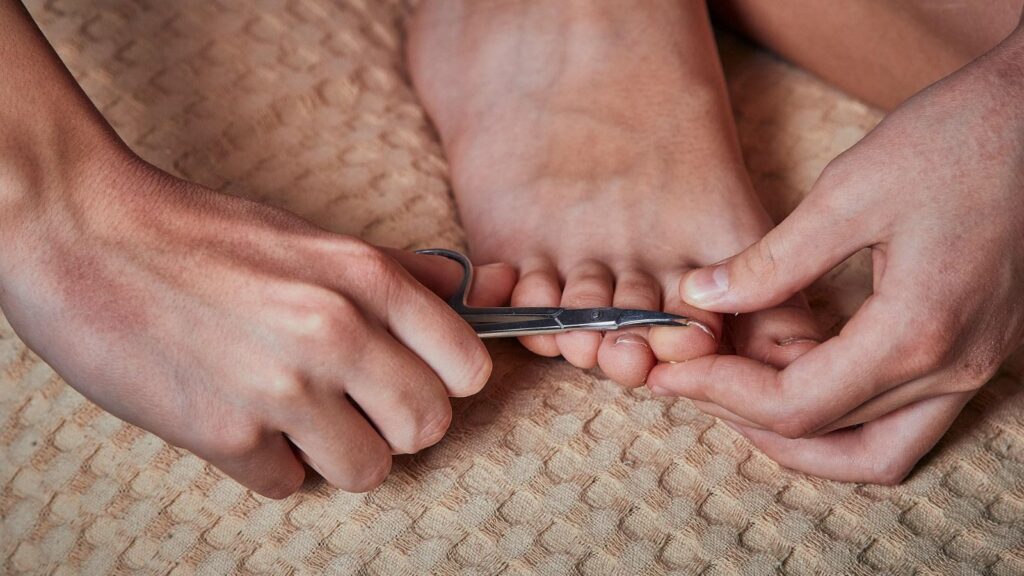
Razor blades, callus shavers and digging out nail corners can easily break fragile skin. Medicated corn plasters carry a similar risk, as their salicylic acid can burn the healthy skin around the corn.
Instead, cutting your toenails straight across lowers the chance of an ingrown nail. For thick calluses, foot callus treatment by a podiatrist can remove hard skin safely with sterile instruments.
Similarly, a nail that keeps growing into the skin may need ingrown toe nails removal treatment rather than repeated trimming.
How Do Footwear and Insoles Protect Diabetic Feet?
Well-fitted shoes spread pressure evenly and shield your feet from injuries you may not feel. A suitable shoe has a wide, deep toe box, a cushioned sole and laces or straps that hold your foot firmly. Before wearing any shoe, check inside it for stones or sharp objects.
Where pressure concentrates under one area, a custom made foot insole can spread the load and lower the risk of calluses or ulcers.
When Does a Diabetic Foot Problem Need Prompt Assessment?
The following diabetic foot symptoms warrant contact with a doctor, polyclinic or podiatrist within 24 hours:
- Spreading redness or warmth: Skin around a wound or nail turns red, hot or swollen.
- Pus or an unpleasant smell: Discharge or odour comes from a wound, blister or nail edge.
- Darkening skin: Part of your foot or a toe turns blue, grey or black.
- Fever alongside a foot wound: Chills or feeling unwell accompany a break in the skin.
Severe foot pain, or a foot that suddenly turns cold and pale, warrants a same-day visit to A&E (Accident and Emergency).
How Does Dr Foot Podiatry Approach Diabetic Foot Care?
At Dr Foot, a diabetic foot assessment typically starts with sensation testing using a monofilament (a fine nylon filament). A podiatrist then reviews your foot pulses, skin, nails and footwear for pressure points and early changes.
Existing calluses, nail problems or wounds can be managed in the same visit, and our podiatrists include a board-certified wound care specialist.
Diabetic Foot Care FAQs
How often should you have diabetic foot screening?
Public healthcare guidance in Singapore advises diabetic foot screening at least once a year. Checks every three to six months may be advised if your risk is higher.
What is the first sign of diabetes in your feet?
Numbness or tingling in your toes is often the first sign of diabetes in feet, alongside dry skin or slow-healing cuts.
Can a diabetic foot ulcer heal on its own?
A diabetic foot ulcer usually needs professional wound care to close, because reduced blood flow and ongoing pressure slow healing.
Schedule a Diabetic Foot Assessment With Dr Foot
Regular checks help you catch diabetic foot changes while they are still small and easier to manage. Schedule a foot assessment with Dr Foot at our Marine Parade, Novena or Orchard clinic to have your risk reviewed.
Schedule a Diabetic Foot Assessment With Dr Foot
Dr Foot’s podiatrists can identify the cause and get you the right treatment.