
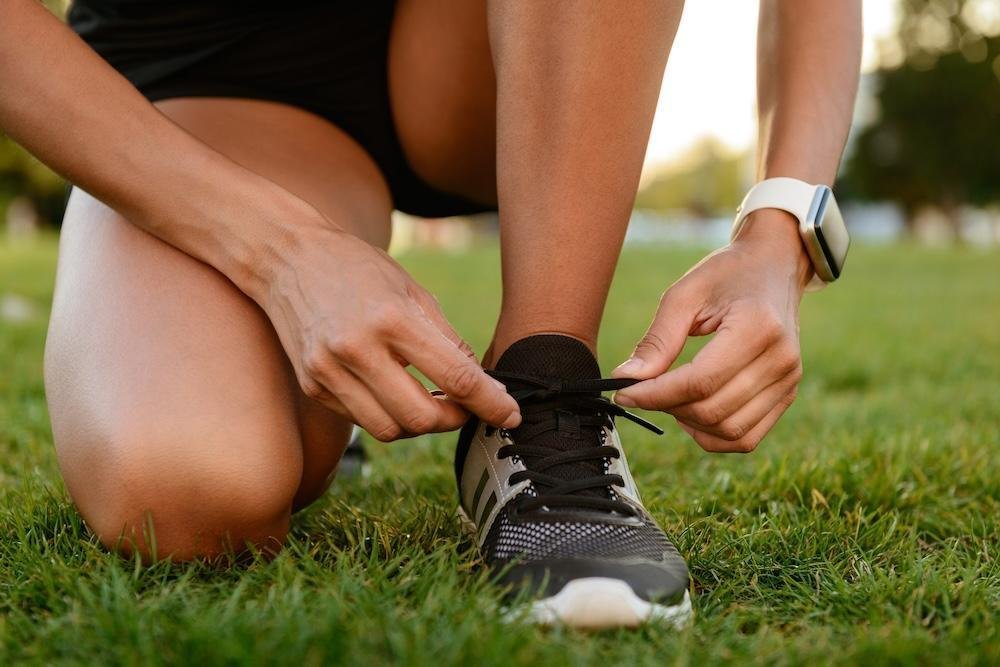
Selecting running shoes for flat feet by arch height alone often leads to the wrong pair. Knowing how to choose running shoes for flat feet starts with the way your arch lowers and your ankle moves under body weight.
The right shoe limits that motion, while a mismatched pair leaves it unchecked. Over weeks of training, the extra strain builds up in the arch, ankle, and knee.
How Do Flat Feet Affect the Way You Run?
Flat feet affect running because a low arch offers less resistance to pronation, which is the foot’s natural inward roll after the heel lands. This happens when the heel tilts outward, the ankle rolls inward, and the shin follows with each stride.
Overpronation describes a roll that goes too far or lasts too long, and a low arch makes that more likely to occur. In a flat foot, the plantar fascia, the band of tissue under the arch, and inner ankle tendons take on more strain.
Contrary to popular belief, many people with flat feet can run for years without pain. If there is aching along the arch or inner ankle, shin pain, or pain around the kneecap after runs, it suggests the extra strain is building due to flat feet.
What Is the Difference Between Flexible and Rigid Flat Feet?
Flat feet are either flexible or rigid; the difference is whether an arch appears when the foot is off the ground.
Flexible Flat Feet Show an Arch When You Are Not Standing
The arch is visible when you sit with your feet off the floor or rise onto your toes, then lowers when you stand. Flexible flat feet are the most common type, and supportive shoes may help limit how far the arch drops.
Rigid Flat Feet Show No Arch in Any Position
In contrast, rigid flat feet are rare, and the arch is absent whether you sit, stand, or rise onto your toes. Causes include arthritis and tarsal coalition (an abnormal connection between two foot bones), so a podiatrist should assess the foot first.
Which Running Shoes Suit Flat Feet: Stability, Motion Control or Neutral?
Running shoes fall into three categories based on how much they resist the foot’s inward roll. Neutral shoes add no resistance, stability shoes add moderate resistance, and motion control shoes add the most. The best running shoes for flat feet control the inward roll without feeling stiff or heavy.
Stability Shoes Suit Mild to Moderate Overpronation
Stability shoes use firmer material along the inner midsole (the cushioning layer under your foot) to slow the inward roll. For painless flat feet, they are often a sensible starting point.
Motion Control Shoes Suit Greater Overpronation or Heavier Runners
Motion control shoes combine a wide base, a stiff heel cup, and firm inner material. The extra material adds weight, so they traditionally suit runners with marked overpronation or higher body weight.
Neutral Shoes Suit Flat Feet That Roll Inward Very Little
Neutral shoes focus on cushioning and add no arch control. They traditionally suit normal or high arches, and arch or inner ankle pain in neutral shoes suggests the foot needs more support.
What Features Make the Best Running Shoes for Flat Feet?
The best shoes for flat feet share five features. They are a firm heel counter, a supportive midsole, built-in arch support, adequate width, and a roomy toe box.
1. A Firm Heel Counter Steadies the Heel and Ankle
The heel counter is the stiff cup at the back of the shoe. A firm counter limits how far the heel tilts outward, which reduces the inward roll of the ankle.
2. A Supportive Midsole Controls the Inward Roll
Firmer midsole material along the inner side slows how quickly the arch drops. Softer foam under the arch compresses further and gives less control.
3. Built-In Arch Support Holds the Arch Under Body Weight
Built-in arch support is a raised area that fills the gap beneath a flat foot. Moderate support usually feels more comfortable than a very tall one.
4. Adequate Width Keeps the Foot From Sliding Sideways
Feet widen when they bear weight, and Singapore’s humid weather can add swelling during longer runs. A good fit holds the heel firmly without pressing on the sides of the forefoot.
5. A Roomy Toe Box Lets Your Toes Spread
The toe box is the front section of the shoe. It needs enough height and width for the toes to spread flat as the foot pushes off the ground.
How Do You Test Running Shoes for Flat Feet in the Shop?
Choosing running shoes for flat feet in the shop comes down to four short checks, done with both shoes on.
- Squeeze the heel counter: Press the sides of the heel cup, which should feel firm and spring back.
- Twist the shoe: A supportive shoe resists twisting through the middle.
- Bend the toes upward: Check that the shoe flexes at the ball of the foot, not the arch.
- Check the length: Confirm a thumb’s width between your longest toe and the end of the shoe.
Wear your usual running socks and bring any insoles you use, because both change the fit. Feet typically swell through the day, so a late-afternoon fitting may match your feet after a run more closely.
Do Shoes or Custom Insoles Matter More for Flat Feet?
The best shoes for flat feet provide a stable base, and custom insoles add support shaped to your own foot. Neither matters more for every runner.
Custom inserts for flat feet are made from an assessment of your foot, so the support sits where your own arch drops. Supportive shoes alone may be enough when flat feet cause no pain, and there is no history of running injuries.
Custom insoles may add value alongside well-fitted shoes in the following situations.
- Pain that returns despite well-fitted shoes
- Repeated injuries on the same side
- Difficulty finding shoes that feel stable
What Mistakes Do People Make When Buying Running Shoes for Flat Feet?
Most mistakes happen when buyers choose by looks or softness rather than by the control a shoe gives the foot. Avoiding them narrows the search for the best running shoes for flat feet.
- Choosing by appearance or brand: Sizing and support vary between brands, so fit and control should guide the decision.
- Buying shoes that are too tight: Feet swell during runs, so a snug fit in the shop may feel cramped later.
- Assuming softer means better: Plush cushioning feels comfortable at first, yet the shoe may lack the firmness a flat foot needs.
- Keeping worn-out shoes: Faded cushioning gives a flat foot less control, so replace shoes on a regular schedule.
Which Running Injuries Are Linked to Flat Feet?
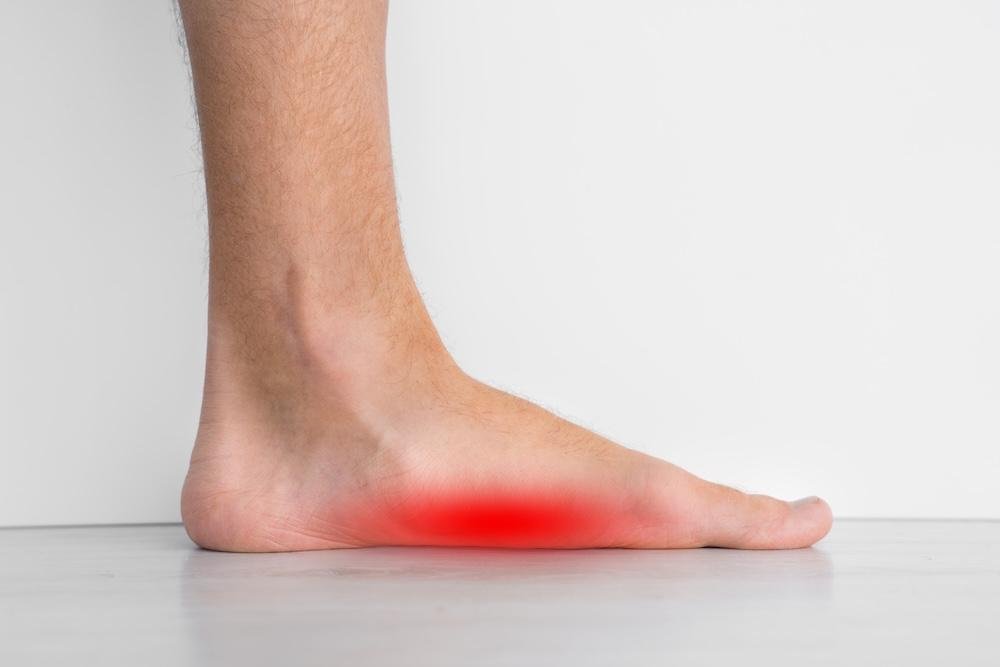
Flat feet are linked to four common running injuries. Each involves tissue that works harder when the arch drops, so the location of pain points to the structure under strain.
Plantar Fasciitis Strains the Band Under Your Arch
Plantar fasciitis (inflammation of the plantar fascia) can develop when a dropping arch stretches that band further. Heel pain is typically worst with the first steps in the morning.
Posterior Tibial Tendon Dysfunction Weakens the Tendon That Holds the Arch
Posterior tibial tendon dysfunction (PTTD) affects the tendon along the inner ankle that supports the arch. Overworking it may cause inner ankle pain and swelling.
Runner’s Knee Follows the Inward Roll of the Shin
Runner’s knee is pain around or behind the kneecap. When the foot overpronates, the shin turns inward, which may add strain to the joint.
Achilles Heel Pain Follows Repeated Calf Tendon Strain
Achilles heel pain occurs where the calf tendon attaches to the heel bone. Overpronation twists the heel with each stride, which may overload the tendon.
When Should You Get a Gait Assessment?
Get a gait assessment when any of the following signs persist despite well-fitted running shoes.
- Arch, heel, shin, or knee pain after running
- Pain that lasts beyond one to two weeks
- Repeated injuries in the same area
- Uneven wear on the soles of your shoes
A gait assessment examines joint movement, muscle strength, and the way your foot meets the ground. Bring your current running shoes, because the wear pattern on the soles shows how your foot has been landing.
Schedule an Assessment to Find Running Shoes That Suit Your Flat Feet
Running shoes for flat feet work when the support matches how your own foot moves. A checklist narrows the options, and a gait assessment shows which level of support suits you.
Schedule an assessment with Dr Foot Podiatry to have your gait and flat feet evaluated and a management plan put in place.
Running Shoes for Flat Feet FAQs
What are the best walking shoes for flat feet?
The best walking shoes for flat feet share the key features of supportive running shoes. Walking involves lower impact than running, so walking shoes typically carry less cushioning.
Can you run with flat feet?
Most people with flat feet can run, and many do so without pain. Pain, swelling, or a foot that feels weak when pushing off suggests the foot needs assessment before you continue training.
How often should you replace running shoes for flat feet?
Replace running shoes roughly every six to nine months, or after 400 to 800 kilometres, because cushioning and support wear down.
Can you wear custom insoles in running shoes?
Yes, if the shoe has a removable insole and enough depth. Remove the factory insole first, because stacking two insoles can crowd the foot. You may read this guide with tips on wearing medical insoles covering the break-in period and fit checks.
Schedule an Assessment to Find Running Shoes That Suit Your Flat Feet
Dr Foot’s podiatrists can identify the cause and get you the right treatment.