
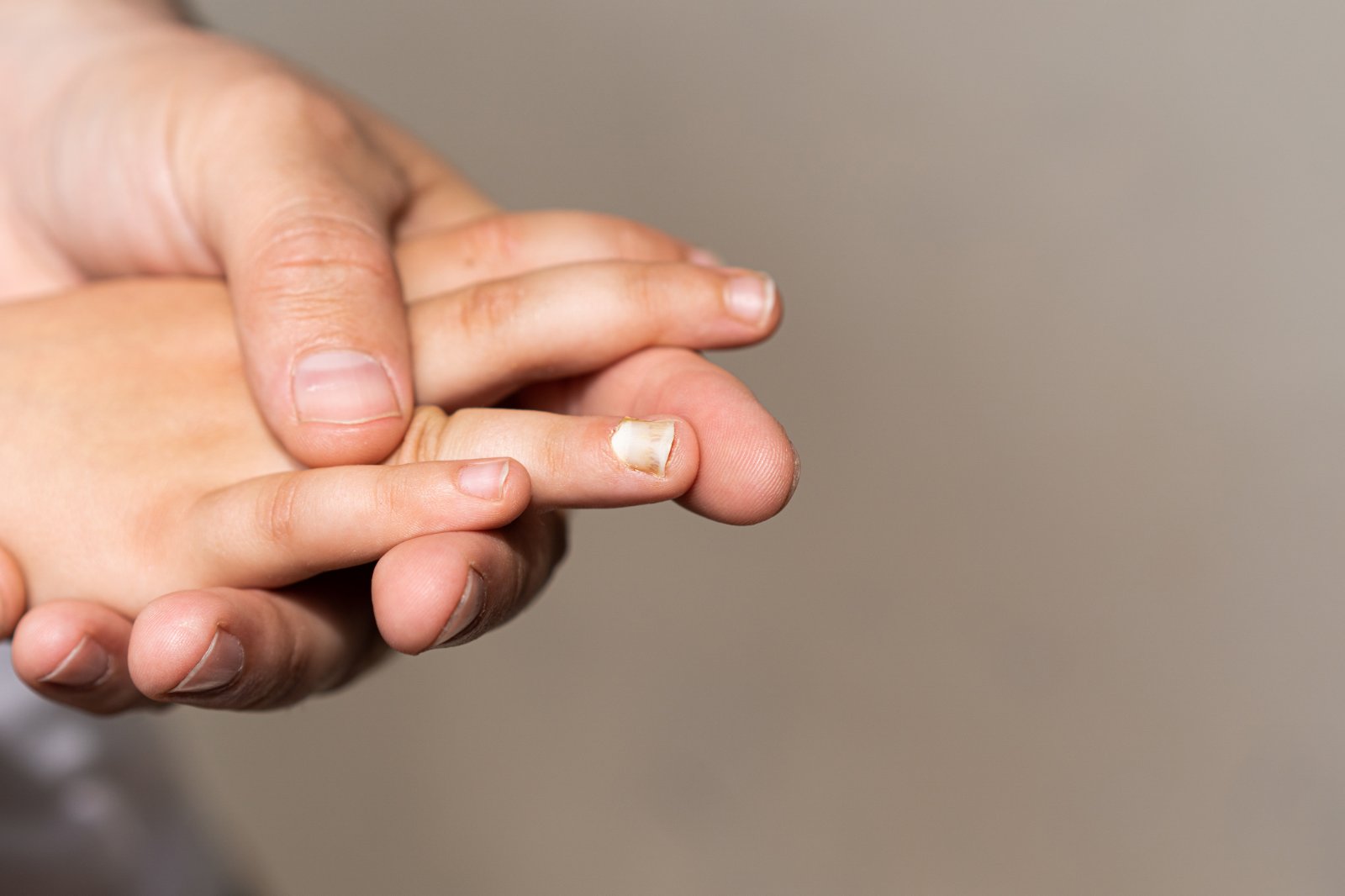
Paronychia is an infection of the nail fold, which is the skin bordering the nail. Usually, it starts when bacteria or fungi enter through a small break.
Redness and throbbing beside your nail often signal paronychia. Spotting it early starts with understanding what paronychia is.
What Is Paronychia?
The meaning of paronychia traces back to Greek, where para refers to beside, and onyx refers to nail.
Medically, the term covers any infection of the nail fold. Paronychia of the finger is common in people whose hands stay wet, such as cleaners and kitchen staff.
In contrast, toe cases often follow nail injury, pressure from footwear, or an ingrown nail edge. Because feet spend long hours inside socks and shoes, moisture and friction repeatedly stress the skin beside the nail.
Acute vs Chronic Paronychia: The Difference
Beyond its location, doctors classify paronychia by how quickly it develops, because the speed of onset points to different triggers and management.
- Acute paronychia: Bacteria cause pain, redness, and swelling within hours or days, often after a minor nail injury.
- Chronic paronychia: Moisture, irritants, or yeast keep the nail fold inflamed for over six weeks, sometimes with ridged nails.
In practice, acute cases appear suddenly and feel painful, whereas chronic cases linger and flare repeatedly. Spotting that pattern helps a podiatrist identify the trigger.
Paronychia Stages: Signs From Redness to Pus
Within either form, symptoms of paronychia usually build through three recognisable stages, each showing how far the infection has progressed.
- Redness and tenderness: The skin beside the nail turns pink or red and feels sore when pressed.
- Swelling and warmth: The nail fold puffs up, feels warm, and throbs, especially under pressure from a shoe.
- Pus formation: A pocket of yellow or white fluid, called an abscess, collects under the skin and stretches the nail fold tight.
Once the infection is managed, the healing stages of paronychia often run in reverse. The pus clears first, the swelling settles next, and the redness fades last, usually over several days.
Causes of Paronychia
With the stages clear, the next step is identifying what sets them off. Most paronychia causes share one feature: a break in the skin seal around the nail that lets bacteria or fungi enter. Three everyday triggers create that break.
Cause 1: Ingrown Toenails
A frequent trigger on the toes is an ingrown toenail, where the nail edge presses into the surrounding skin. The pressure inflames the nail fold and gives bacteria a direct entry point. As a result, paronychia on the toes often begins with a sore, swollen nail corner.
Cause 2: Cutting Nails Too Short or Picking at Them
Grooming habits provide a second route for infection. Cutting nails too short leaves a sharp edge that may grow back into the skin.
Similarly, picking at hangnails (loose skin tears beside the nail) or clipping the cuticle (the thin seal between nail and skin) opens tiny wounds.
Cause 3: Tight Shoes and Sweaty Feet in Singapore’s Climate
Footwear and climate create a third route. Narrow shoes press the nail edges into the skin, while sweaty feet keep that skin soft and easier to break.
Singapore’s humidity and long commutes in closed footwear then keep the feet damp for hours, favouring bacteria and the fungi behind fungal nail infections.
Paronychia vs Ingrown Toenail vs Fungal Nail
Because the triggers overlap, paronychia is often mistaken for two other nail problems. However, each looks slightly different.
- Paronychia: The nail fold turns red, swollen, and painful, and pus may collect beside an otherwise normal nail.
- Ingrown nail: The nail edge digs into the skin, causing pain, and infection may follow.
- Fungal nail: A toenail fungus infection thickens and discolours the nail itself, usually without sudden pain.
Put simply, paronychia affects the skin around the nail, ingrown nails disturb the nail edge, and fungal infections change the nail plate.
At the same time, the three can occur together, so a podiatrist’s assessment is useful to identify which one applies.
Safe Home Care for Paronychia
Once the signs are recognisable, mild early paronychia may settle with simple home care, provided no pus pocket has formed.
- Soak the area: Use warm water for 10 to 15 minutes, a few times daily, to ease tenderness and soften the skin.
- Dry thoroughly: Pat the nail fold and the spaces between the toes dry, since moisture feeds bacteria and yeast.
- Protect the nail fold: Wear roomy shoes or open footwear to reduce pressure while the skin settles.
What to Avoid at Home
Many people want to know how to drain paronychia at home, but several common attempts worsen the infection. Here’s what to avoid:
- Needle pricking: A needle can push bacteria deeper into the nail fold and introduce new germs.
- Squeezing the pus: Pressure can force the pus into surrounding tissue and spread the infection.
- Digging at the nail corner: Prodding at the edge can break healthy skin and create a fresh entry point.
- Cutting the cuticle: Peeling it removes the seal that protects the nail fold.
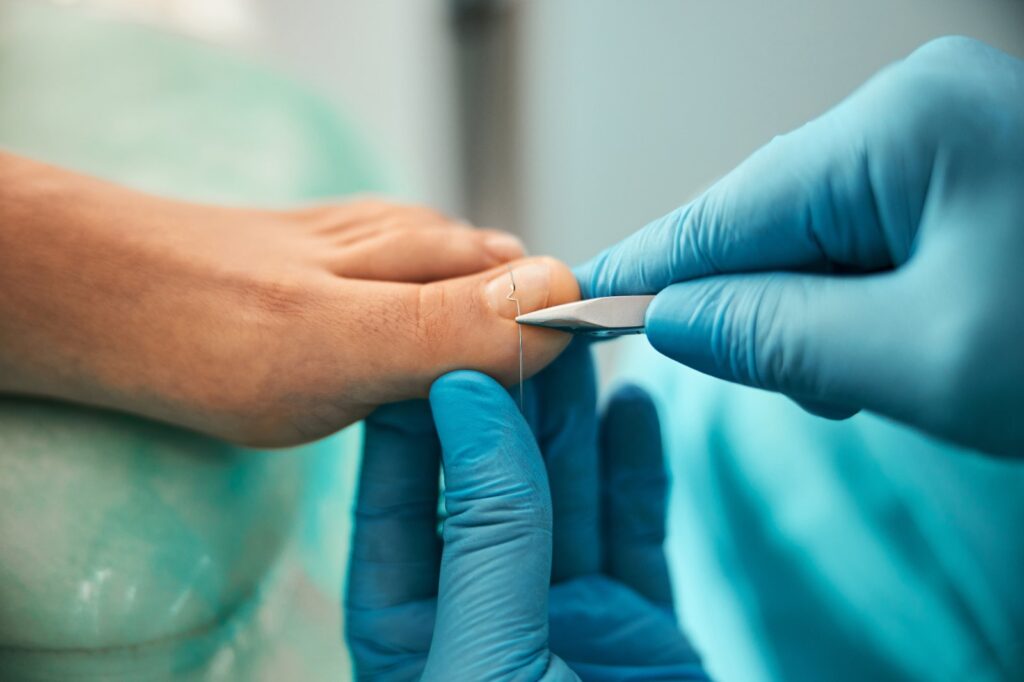
Leave drainage to a podiatrist, who works under sterile conditions and assesses the pocket first.
Paronychia Treatment: How a Podiatrist Manages It
When home care falls short, a podiatrist can assess how far the infection has progressed and build a management plan around that stage.
- Draining the abscess: A sterile incision releases the pus pocket and typically eases the pressure within the nail fold.
- Addressing the nail edge: Partial nail removal, offered as part of ingrown nail treatment in Singapore, can relieve pressure from a recurring ingrown edge.
- Medication: A doctor may prescribe antibiotics or antifungals when the infection runs deep or keeps returning.
As draining pus without correcting the pressure or moisture behind it often leads to recurrence, your podiatrist may also review your footwear, nail shape, and cutting technique.
How to Prevent Paronychia: Tips for Healthy Nails
After the infection settles, a few daily habits for healthy feet help protect the skin seal around your nails.
- Trim toenails straight across: Cut level with the toe tip and file sharp corners gently.
- Leave cuticles intact: Skip clipping or pushing them back, since they seal the nail against bacteria.
- Keep feet dry: Change damp socks promptly and choose breathable shoes with room for the toes.
- Wear gloves for wet work: Use cotton-lined gloves during washing and cleaning to shield the fingers from moisture.
Red Flags: When to See a Doctor
Even with careful habits, some cases need professional assessment. A podiatrist or doctor should review paronychia whenever these symptoms appear:
- Pus that keeps collecting under the skin
- Redness spreading beyond the nail fold
- Fever, chills, or red streaks on the skin
- No improvement after a few days of home care
Beyond these signs, recurring cases may also need toenail infection treatment in Singapore, especially when a fungal nail infection lies behind the problem. People with diabetes or reduced circulation face added risk, because small breaks in the skin heal less readily.
Frequently Asked Questions About Paronychia
Can paronychia heal on its own?
Mild acute paronychia may settle within a few days with warm soaks and dry, protected skin. Chronic cases usually take longer, since the underlying cause, such as constant moisture, needs to change first.
Is paronychia contagious?
Paronychia rarely spreads from person to person. However, shared nail clippers and files can carry the bacteria or yeast involved, so cleaning tools after each use helps limit the spread.
Can paronychia affect the toes as well as the fingers?
The infection can develop in any nail fold. Fingers more often suffer from wet work, while toes more often suffer from footwear pressure and ingrown nail edges.
Book a Consultation for Paronychia
Many people with recurring paronychia have already soaked, trimmed, and picked at the nail several times. However, relief lasts a few days, then the swelling returns because the pressure, moisture, or nail edge behind it remains.
Managing that cause alongside the infection may break the cycle. Schedule an assessment with Dr Foot Podiatry to have the nail fold evaluated and a management plan put in place.
Book a Consultation for Paronychia
Dr Foot’s podiatrists can identify the cause and get you the right treatment.