
Sever’s Disease (Calcaneal Apophysitis)
Heel Pain in Growing, Active Children
Sever’s disease is one of the most common causes of heel pain in children and adolescents, particularly those who are physically active. Despite its name, it is not a disease and does not cause permanent damage when managed appropriately.
At our clinic, Sever’s disease is approached as a load-related, biomechanical condition associated with growth, activity, and how forces move through the foot and lower limb.
What Is Sever’s Disease?
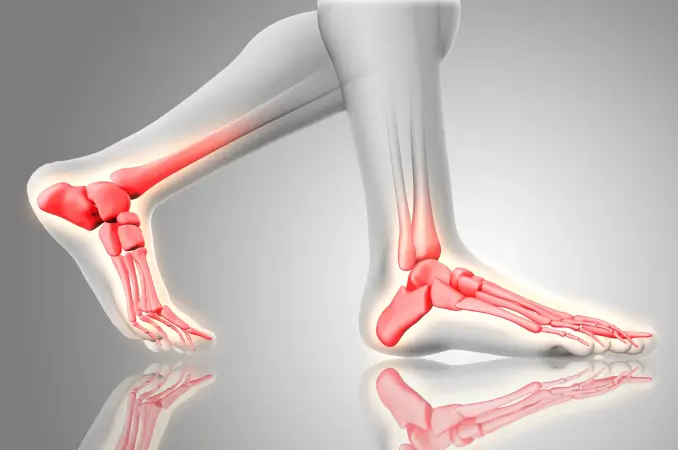
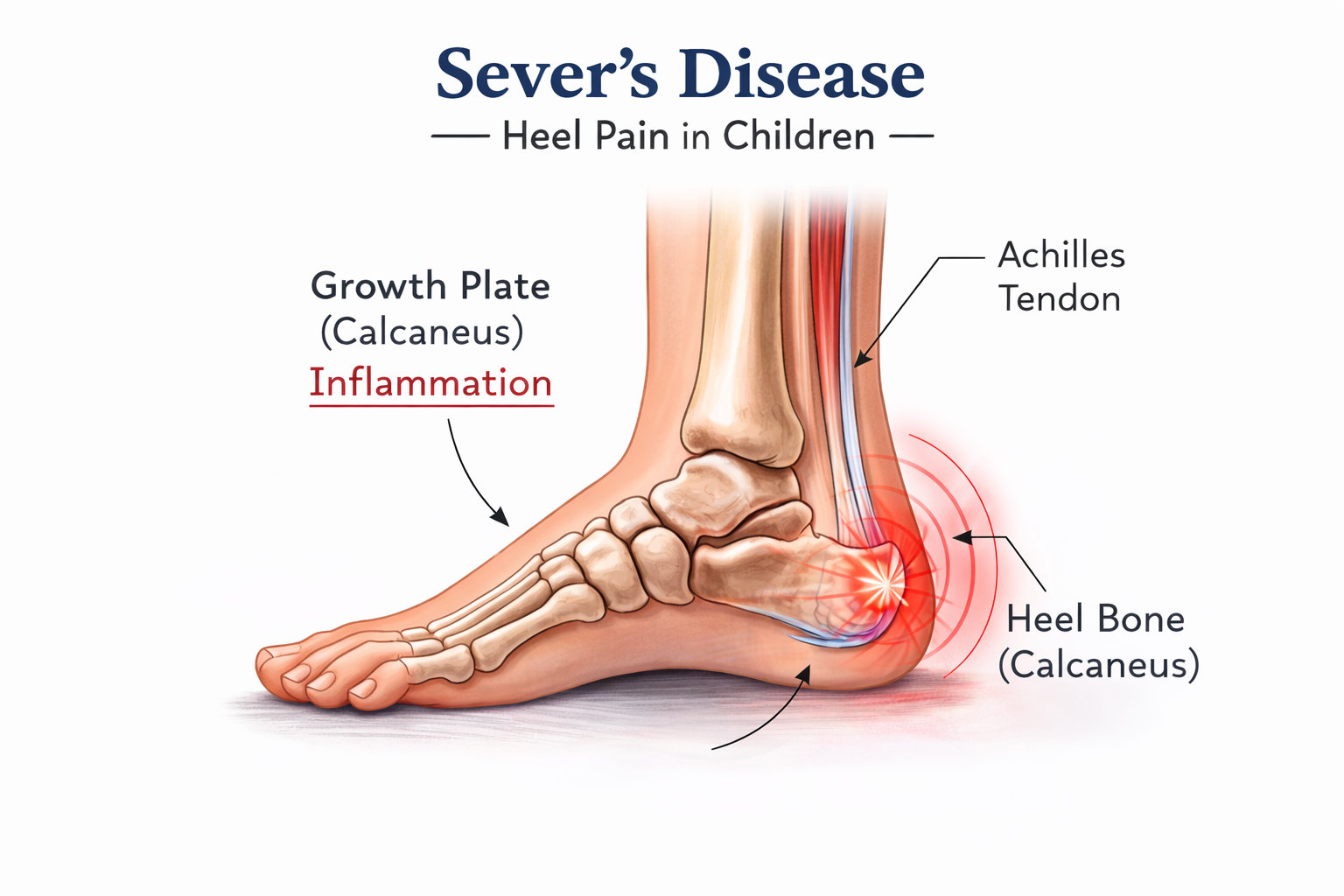
Sever’s disease, clinically termed calcaneal apophysitis, is irritation of the growth plate at the back of the heel bone (calcaneus).
In children, growth plates are areas of developing bone that are more vulnerable to stress. During growth spurts, the heel bone often grows faster than the calf muscles and Achilles tendon. This creates increased tension where the Achilles attaches to the heel, particularly during running and jumping activities.
In simple terms, Sever’s disease occurs when repetitive loading exceeds the heel’s ability to recover.
Who Is Affected?
Sever’s disease most commonly affects:
- Children aged 7–12 years
- Physically active children
- Children experiencing a rapid growth spurt
- Children involved in running and jumping sports
It may affect one or both heels and often fluctuates with activity levels.
Common Symptoms
Symptoms typically include:
- Pain at the back or underside of the heel
- Pain during or after sport
- Limping or altered walking pattern
- Pain when squeezing the sides of the heel
- Symptoms that improve with rest but recur with activity
Pain is usually mechanical and activity-related, rather than constant.
Why Does Sever’s Disease Develop?
Sever’s disease is rarely caused by growth alone. It is usually the result of growth combined with biomechanical and load-related factors.
Growth and Tissue Tension
- Rapid bone growth relative to muscle length
- Increased tension through the Achilles tendon
- Reduced ankle flexibility
Biomechanical Factors
How a child moves and loads their feet plays a significant role. Common contributing factors include:
- Reduced ankle dorsiflexion (limited upward ankle movement)
- Flat feet or high-arched feet
- Poor shock absorption
- Altered gait patterns
- Reduced lower-limb strength or control
Load and Activity
- Sudden increase in training volume or intensity
- Multiple sports played concurrently
- Hard playing surfaces
- Inadequate recovery time
Footwear
- Worn-out or unsupportive shoes
- Studded footwear with minimal cushioning
- Poor heel support
How Is Sever’s Disease Diagnosed?
Diagnosis is clinical, based on a thorough history and physical examination. Imaging is rarely required unless symptoms are unusual or not improving as expected.
Assessment focuses on:
- Pain behaviour and activity patterns
- Growth stage
- Foot posture and gait
- Ankle and calf flexibility
- Lower-limb biomechanics
- Footwear and sporting demands
Treatment: Evidence-Based Management
The aim of treatment is to reduce stress on the heel while maintaining safe activity, rather than enforcing prolonged rest.
Activity Modification
Temporary reduction or modification of painful activities may be required during flare-ups, with a
structured return to sport.
Stretching and Strengthening
- Calf stretching to reduce Achilles tension
- Progressive strengthening of foot and lower-limb muscles
Footwear and Orthotic Support
Appropriate footwear and, where indicated, orthotic therapy may be used to:
- Improve shock absorption
- Reduce strain on the heel growth plate
- Address underlying biomechanical contributors
Adjunctive Therapies
In cases where symptoms persist or recovery is slower than expected, adjunctive therapies may be considered alongside active management.
Shockwave therapy and Extracorporeal Magnetotransduction Therapy (EMTT) are non-invasive modalities that may help:
- Reduce pain sensitivity
- Improve local circulation
- Support tissue recovery in surrounding soft tissues
These therapies are used selectively and do not replace rehabilitation, load management, or biomechanical correction.
Is Sever’s Disease Permanent?
No. Sever’s disease is self-limiting and resolves once the growth plate matures. However, without appropriate management, symptoms can persist for months or recur repeatedly.
Early assessment helps:
- Reduce pain
- Minimise flare-ups
- Support continued participation in sport
- Prevent unnecessary activity avoidance
When Should You See a Podiatrist?
Assessment is recommended if:
- Heel pain is limiting sport or daily activity
- Limping persists
- Pain keeps recurring
- Both heels are affected
- You want guidance on biomechanics, footwear, or load management
Our Approach
At our clinic, Sever’s disease is managed through education, biomechanical assessment, and individualised treatment planning. We aim to reduce pain, address contributing factors, and help children remain active and confident throughout growth.